
Business casual for women means structured dressing with room to breathe: tailored pants or a midi skirt, a blouse or knit top, and a blazer nearby if the day calls for it. The three cues that signal it instantly are structure (a jacket or tailored waistband), a clean silhouette with no distressing or fraying, and shoes that look intentional rather than athletic. What counts as polished still shifts by office, industry, and even the day of the week.
TL;DR:
Structured blazers and tailored trousers remain essential investment pieces for creating polished business casual outfits.
Neutral color palettes with one or two accent tones help maximize versatility while maintaining a professional look.
Dark wash, non-distressed jeans can be acceptable in business casual settings when paired with a blazer and tailored top.
Small, simple accessories, including shoes, jewelry, and light scarves, significantly influence the outfit’s professional appearance.
Proper fit and seasonal layering are more impactful for a polished look than expensive fabrics or trendy details.
Table of Contents
- What Counts as Business Casual for Women Right Now
- Ten Outfit Formulas You Can Copy Tomorrow
- Shoes and Accessories That Finish the Look
- Are Jeans Business Casual, and What Should You Skip?
- Building a Business Casual Capsule That Actually Works
- Why Fit Beats Fabric Every Time
- Dressing Business Casual Through the Seasons
- Real Outfit Examples From the Shop Nova Catalog
- Grooming and Makeup That Match a Business Casual Look
- Taking a Business Casual Outfit From Desk to Evening
- Shop the Looks: Where to Start Building Your Capsule
- A Stylist’s Honest Take on Business Casual Rules
- Sources
What Counts as Business Casual for Women Right Now
Business casual for women in 2026 centers on five categories: blazers, tailored ankle trousers, midi skirts or dresses, blouses, and knit sweaters, according to Who What Wear. Each piece earns its spot for a reason.
-
Blazers: the fastest upgrade in your closet. A structured blazer over almost anything reads more professional in seconds, according to Corporette.
-
Tailored trousers: look for a straight or slightly wide leg that breaks cleanly at the shoe, not a puddle of fabric.
-
Midi skirts or dresses: hit at or below the knee; check that the fabric holds shape when you sit.
-
Blouses: silk, cotton, or a good synthetic blend that doesn’t wrinkle the moment you sit at your desk.
-
Knitwear: fine-gauge sweaters layer under blazers without bulk.
Buy blazers and trousers as investments since they anchor the most outfits. Blouses and seasonal knits are fair game for lower-cost, trend-driven picks. Stick to a neutral base (black, navy, camel, gray) and let one or two pieces carry color or pattern.
Ten Outfit Formulas You Can Copy Tomorrow
These formulas work because they repeat the same logic: one structured piece, one relaxed piece, shoes that match the room. Swap in a blazer or a bolder accessory to raise the formality of any of them.
-
Desk day: blouse, tailored trousers, loafers, blazer draped on the chair.
-
Client meeting: fitted blazer, midi dress, low block heel, structured tote.
-
Hybrid/Zoom day: polished blouse on top, leggings off camera, statement earrings.
-
Team lunch: knit sweater, wide-leg trousers, ballet flats.
-
Casual Friday: dark denim, fitted blazer, loafers.
-
Presentation day: sheath dress, cropped blazer, pointed flats.
-
Rainy commute: trench coat over a sweater and trousers, water-resistant loafers.
-
Summer office: sleeveless blouse, cropped trousers, block-heel sandals.
-
Winter layering: turtleneck under a blazer, wool trousers, ankle boots.
-
Travel-for-work day: knit dress, cardigan, slip-on flats for easy airport security.
For outfit formulas that hold up daily, the blazer-plus-blouse-plus-trouser combination is the most repeatable across industries, from law firms to creative agencies. A finance office will lean darker and more tailored; a design studio has more room for pattern and color.
Shoes and Accessories That Finish the Look
Shoes carry more weight in a business casual outfit than most women give them credit for. Loafers, flats, block heels, and low pumps all read as professional, according to Who What Wear. Sneakers work in creative or startup offices, but only clean, minimal styles, never anything athletic-looking, per Marie Claire’s reporting on how successful women dress.
-
Commuting: a structured tote that fits a laptop and survives a subway platform.
-
Client days: a smaller, polished bag that signals you’re not hauling your whole life around.
-
Jewelry: two or three pieces max, and pick one metal tone to keep things simple.
-
Scarves: an easy way to add color without buying a new blouse.
Pro Tip: Keep one pair of loafers and one low block heel in your bag or desk drawer. Swapping shoes takes ten seconds and instantly shifts an outfit from desk casual to client-ready.
Are Jeans Business Casual, and What Should You Skip?
Jeans can work in business casual if they’re dark wash, free of distressing, and cut in a tailored straight or wide leg, then anchored with a blazer, according to Who What Wear. Skip anything with rips, fading, or a skinny cut that reads more weekend than workday.
-
Avoid: ripped denim, graphic tees, flip-flops, gym leggings, anything sheer without a layer underneath.
-
Rescue move when unsure: throw on a blazer. It fixes almost every borderline outfit.
Building a Business Casual Capsule That Actually Works
A work capsule of 20 to 28 pieces covers most five-day office weeks without repeating the same combination twice, according to PureWow. If you want to start smaller, a 7-piece micro capsule does the job: blazer, button-up blouse, knit top, tailored trousers, dark denim, loafers, and a structured tote.
-
Base the palette on two or three neutrals plus one accent color.
-
A tighter palette means everything mixes, which cuts down on the morning “nothing matches” scramble.
-
Prioritize fit first, then fabric quality, then versatility. A perfectly fitted blazer in a mediocre fabric still outperforms a beautiful blazer that pulls at the shoulders.
Wide-leg and tailored trousers are having a real moment because they split the difference between comfort and a clean line, a mix stylists point to as a reason capsule pieces are worth the upfront cost.
Why Fit Beats Fabric Every Time
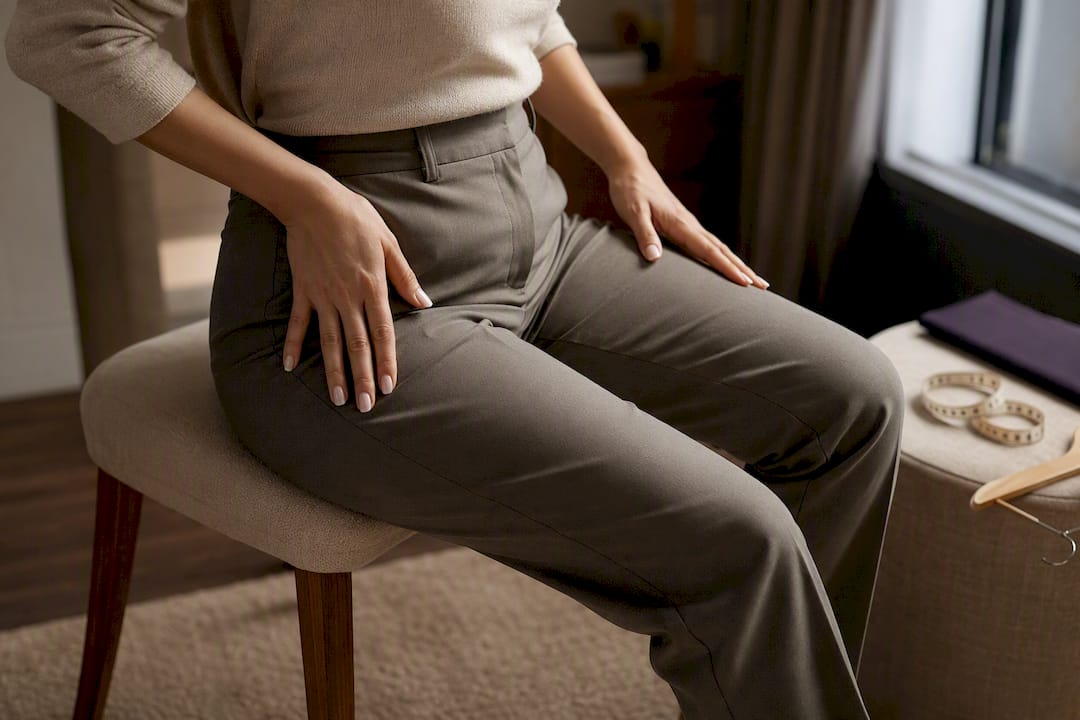
A tailored blazer or well-fitted trousers do more for a business casual outfit than any expensive fabric, according to Corporette. Check three spots first: the shoulder seam should sit right at the edge of your shoulder, the waistline should hit your natural waist without gapping, and a jacket should end somewhere between your hip bone and mid-thigh depending on your frame.
Hem length and shoulder fit are the cheapest, most visible fixes a tailor can make, and they matter more than complicated alterations. A $15 hem on a pair of trousers can change how an entire outfit reads.
Pro Tip: Try clothes on at home under the lighting you’ll actually wear them in, and sit down in trousers before buying. A pair that looks sharp standing up can pull or gap the second you sit at your desk.
Dressing Business Casual Through the Seasons
Warm months call for lightweight knits, breathable cotton, and linen blends that don’t wilt by 3 p.m. Cold months are where wool blends and a structured coat earn their price tag, since they hold shape through a whole winter of commuting, per Marie Claire’s fall workwear guide.
-
Warm weather: linen trousers, short-sleeve blouses, block-heel sandals.
-
Cold weather: wool-blend trousers, turtlenecks, a wool coat that layers over a blazer.
-
Transitional pieces: a trench coat and loafers carry you through spring and fall without a wardrobe overhaul.
For video calls, the outfit only needs to read as professional from the shoulders up. A structured blouse or a scarf does the work, and tucking your blazer’s lapel flat before you sit down keeps it from bunching on camera, a trick Corporette recommends for remote days.
Real Outfit Examples From the Shop Nova Catalog
Seeing the rules applied to actual pieces makes them easier to copy. Here’s how three Shop Nova items slot into the formulas above.
-
An elegant office blouse with bow-neck detailing paired with tailored trousers and a blazer covers a client meeting without a single new purchase beyond the top.
-
A versatile cotton embroidered blouse works for desk days and layers cleanly under a cardigan for cooler mornings.
-
A satin bubble-sleeve blouse adds personality to a presentation-day outfit while staying inside the polished, structured silhouette this guide keeps coming back to.
Each piece checks the same three boxes: clean fit, fabric that holds shape through a workday, and a silhouette that reads professional without looking stiff.
Grooming and Makeup That Match a Business Casual Look
Your outfit sets the tone, but grooming finishes it. The goal isn’t a full transformation, it’s consistency, so your look feels intentional from your hair to your shoes.
Keep hair polished but not fussy: a low bun, a sleek ponytail, or blown-out waves all work. Flyaways and unbrushed texture are the fastest way to undercut a sharp outfit, even when the clothes are right.
Makeup for business casual settings tends toward “finished, not flashy.” A base that evens skin tone, groomed brows, a touch of mascara, and a neutral or berry lip cover most office days. Save bold eyeliner or a bright lip for evening events layered on top of your day look, rather than your everyday desk routine.
Nails matter more than people expect, especially in client-facing roles. A clean, short manicure in a neutral or classic red reads more professional than long acrylics or chipped polish. If you’re pressed for time, buffed bare nails still look more intentional than a color that’s grown out.
Fragrance is worth a mention because open-plan offices make it a shared experience. Keep it light. A scent that fills a conference room reads as an oversight, not a style choice.
The throughline across grooming, hair, and makeup is the same one that governs the clothes: structure and intention beat effort for effort’s sake. A five-minute routine done consistently outperforms an elaborate one applied inconsistently, and it matches the “polished but not overdone” spirit that defines business casual dressing in the first place.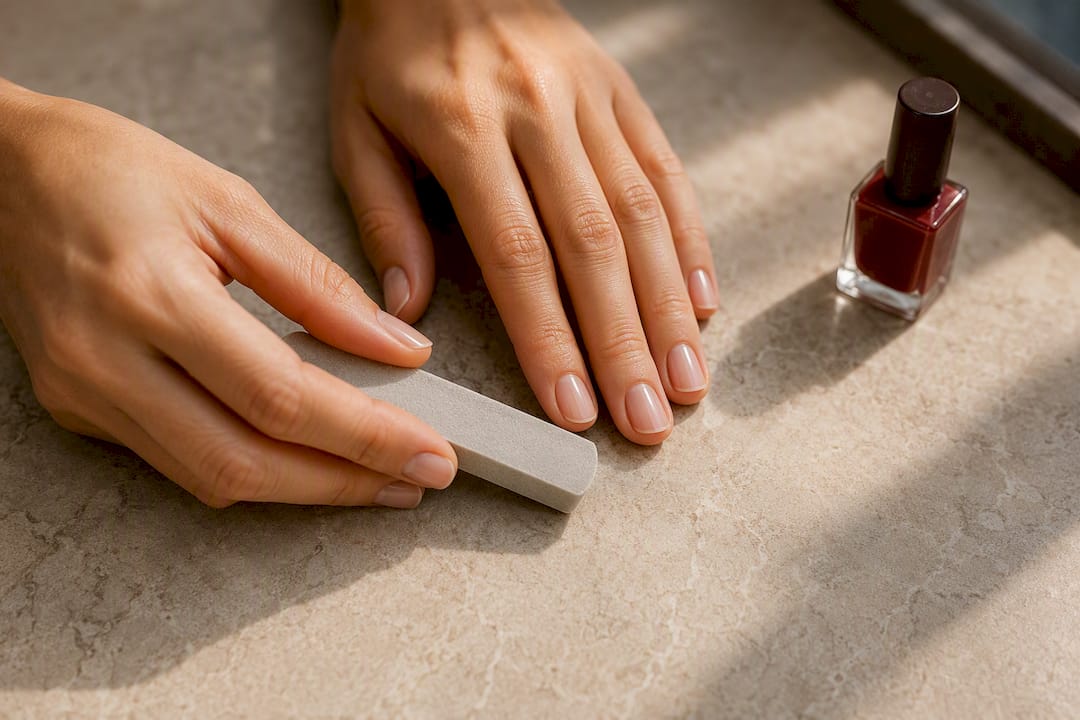
Taking a Business Casual Outfit From Desk to Evening
The fastest way to move a daytime outfit into evening territory is to change one thing, not the whole outfit. Swap your loafers for a heeled sandal or ankle boot, and the same midi dress that worked at your desk now works at dinner.
Jewelry is your next lever. Add a statement earring or a stack of thin bracelets you’d have skipped for the office. The blouse-and-trouser combination that got you through client meetings can go straight to a casual after-work event if you drop the blazer and add a cropped jacket or a leather moto layer instead.
Makeup transitions the same way: deepen your lip color, add a swipe of eyeliner, or dust on a warmer bronzer. None of this requires reapplying your whole face, just intensifying what’s already there.
Bags matter more than people think here too. A structured tote says “workday.” A smaller crossbody or clutch, even in the same neutral tone, signals you’ve shifted gears without needing to go home and change first.
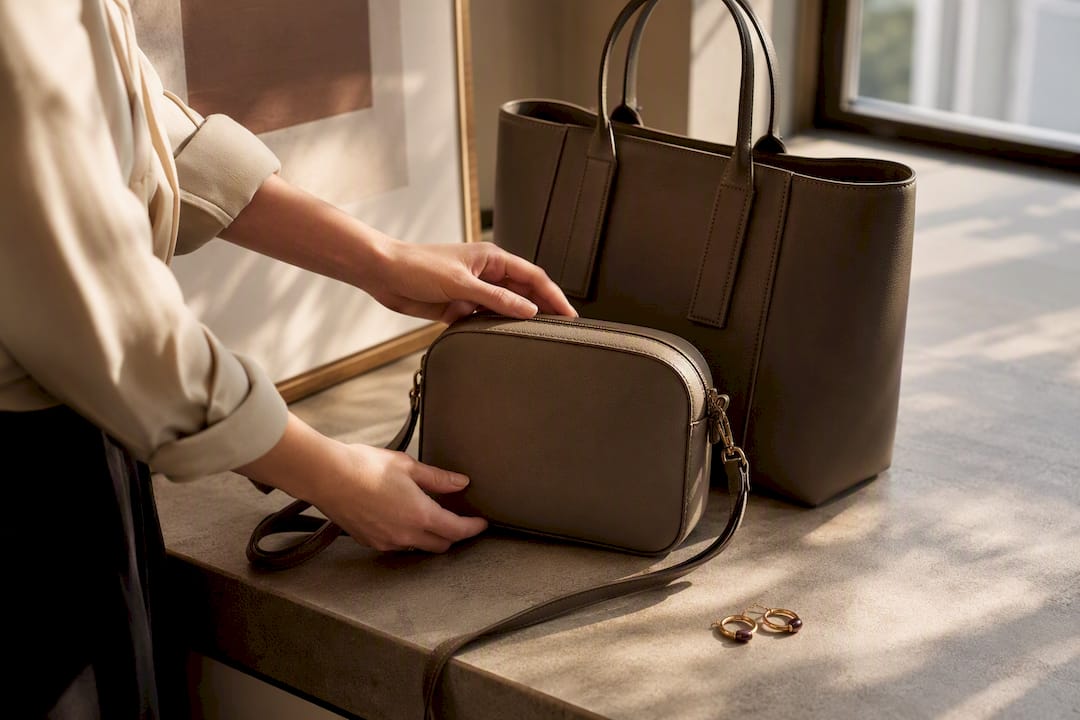
Keep one transitional piece in your bag or car if you know you’re heading somewhere after work: a bold lip, a pair of statement earrings, or a cropped jacket. That single item is usually enough to carry a business casual outfit from a 9 a.m. meeting to a 7 p.m. dinner without missing a beat.
Shop the Looks: Where to Start Building Your Capsule
Affordable options make building this kind of capsule possible without asking you to compromise on fit, with inclusive sizing that covers plus-size shoppers who often get left out of trend-forward workwear.
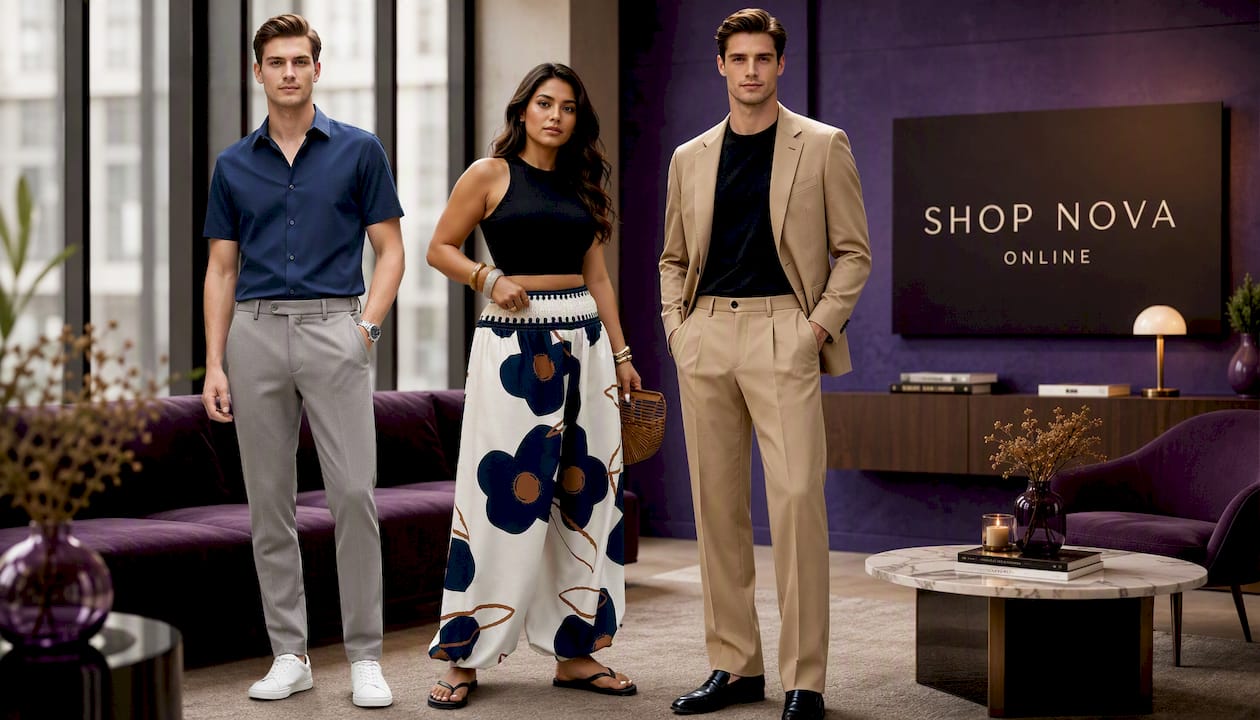
If cooler months are ahead, the coffee-toned brushed casual pants bring a stretch waistband and a thicker brushed fabric that holds up through a full day of sitting and standing, exactly the kind of comfort-meets-structure balance this guide keeps pointing to. For readers who want a wide-leg trouser in inclusive sizing, the plus size floral elastic waist pants give you a print-forward option that still pairs cleanly with a blazer for client days. The catalog also carries versatile pleated wide-leg dress pants if you’re shopping for a partner’s business casual wardrobe alongside your own.
Check the sizing chart on each product page before you order, since fit is the single biggest factor in whether a piece reads as business casual once it’s on. Start with one pair of trousers and one blouse, build outward from there.
A Stylist’s Honest Take on Business Casual Rules
Most of the anxiety around business casual comes from treating it as a rulebook instead of a starting point. The pieces matter less than how they fit you specifically. A $40 blazer that fits your shoulders will outperform a $400 one that doesn’t, every single time.
My one rule: when in doubt, add structure, not more clothes. A blazer, a tucked-in blouse, or a pair of trousers with a real waistband will fix an outfit faster than buying something new. Confidence in business casual comes from knowing your silhouette works, not from chasing every trend that shows up in your feed.
— Joseph
Sources
- What Is Business Casual: The 5 Pieces to Wear | Who What Wear
- Business casual for women / stylist guidance | Corporette
- Work wardrobe capsule advice and essentials | PureWow
- The work outfits and style tips successful women live by | Marie Claire
Recommended
- Elegant Women Office Blouse Fashion Ruffled Stitching Solid Shirt
- Satin Bubble Sleeve Casual Shirt for Women - Elegant Round Neck
- Elegant Office Blouse for Women Autumn Fashion Bow Neck Blusas
- Elegant Women’s Blouse: The Perfect Blend of Style and Comfort
Created with BabyLoveGrowth to rank on Google and in AI search


