
Business casual for women means tailored, structured pieces worn without the stiffness of a full suit. You can hit the mark almost every time by anchoring an outfit to three things: a structured topper like a blazer or cardigan, tailored bottoms or dark elevated denim, and polished, closed-toe shoes. Everything else, the blouse, the jewelry, the bag, is styling on top of that frame.
TL;DR:
Dark, structured blazers and shoes are the most noticeable investment pieces that maximize professionalism and durability in business casual wardrobes.
Jeans are acceptable only if they are dark, clean, and free of distressing, and they should be paired with a blazer or structured top to appear intentional.
Starting with a defined capsule wardrobe of around 20 to 28 pieces, including three blazers and multiple bottoms, ensures versatility and minimizes outfit repetition.
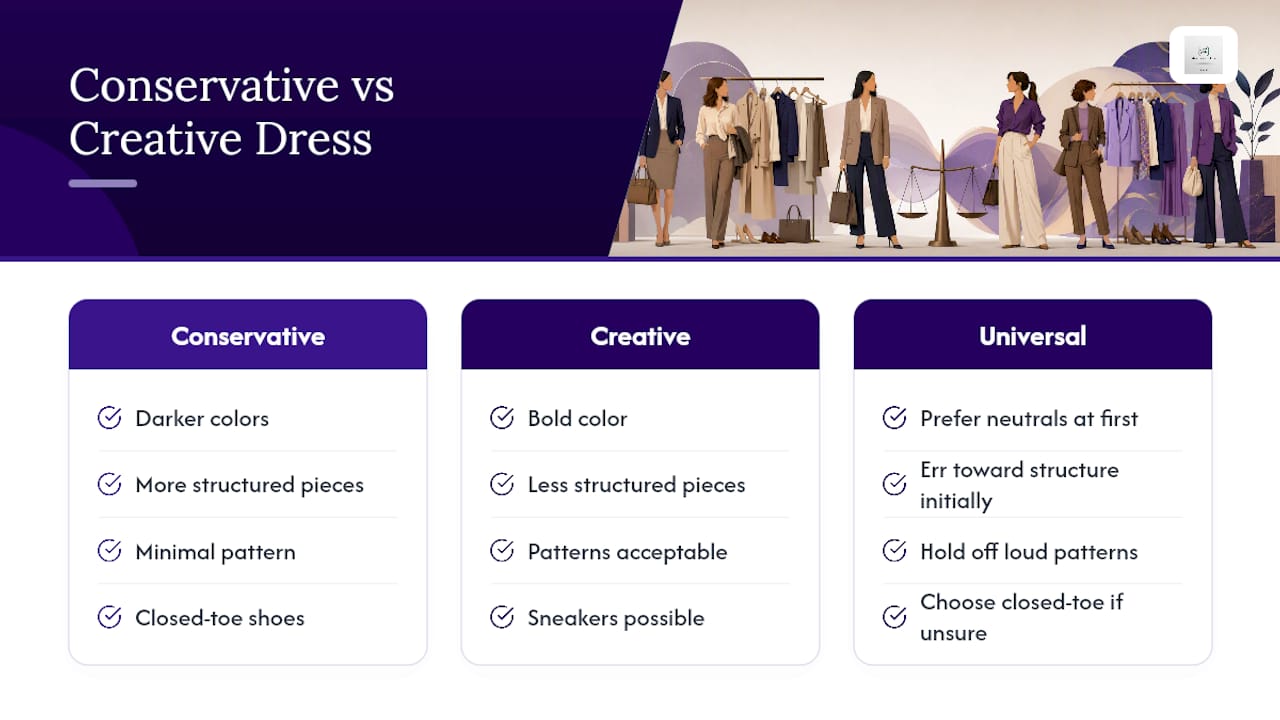
In conservative workplaces, stick to darker colors, minimal patterns, and closed-toe shoes, while creative environments allow bold colors, statement pieces, and sneakers.
Comfort is vital, so select fabrics with stretch, test fit before long days, and layer strategically to maintain both professionalism and ease throughout the day.
Table of Contents
- What Counts as Business Casual for Women?
- 6 Business Casual Outfit Formulas You Can Copy Today
- Which Shoes and Accessories Read as Professional?
- Why Fit and Fabric Matter More in Business Casual
- How to Build a Business Casual Capsule Wardrobe
- Color Coordination and Patterns for Business Casual
- Staying Comfortable Without Losing the Professional Look
- Taking Business Casual From Day to Evening
- Dressing for Conservative vs. Creative Office Cultures
- Author Note: Shop Nova Online’s Practical Approach
- Shop the Formulas: Curated Picks From Shop Nova Online
- Sources
- FAQ
What Counts as Business Casual for Women?
The core wardrobe for business casual includes tailored blazers, button-down shirts or blouses, structured trousers or midi skirts, sweaters or cardigans, and shoes like loafers, flats, or low-heeled pumps. Sneakers and heavily distressed or overly casual fabrics generally get excluded, unless the office runs on the informal end of the spectrum.
Here’s the piece most guides skip: business casual is not one dress code. It shifts by industry, region, and even by department within the same company. A law firm’s version looks nothing like a design agency’s version, and dress codes stay fluid enough that the smartest move on your first week at a new job is to watch what your manager and senior peers actually wear, not what the employee handbook says.
Build your foundation around these staples:
-
Blazers in neutral tones (navy, black, camel, gray) that pair with almost everything else you own
-
Tailored trousers with a clean line through the hip and a break that suits your shoe height
-
Midi skirts in stable fabrics that hold shape when you sit for a full meeting
-
Blouses and refined knit tops that layer easily under a blazer or stand alone
-
Cardigans for offices that run cold or for a softer alternative to a blazer
-
A structured coat for outerwear that doesn’t undercut a polished look the second you walk outside
-
A neutral tote or structured bag big enough for a laptop but not slouchy
Dark, undistressed denim has earned a spot in most business casual wardrobes now, especially paired with a blazer or a crisp blouse. Whether it flies at your office depends entirely on how conservative the culture runs, more on that in the outfit formulas below.
When you’re shopping, put your money where it shows. Blazers and shoes are the pieces people notice first and the ones that wear out fastest under regular use, so buy those as investment pieces. Blouses, camisoles, and basic knit layers can absolutely come from the budget end of your closet without anyone clocking the difference.
6 Business Casual Outfit Formulas You Can Copy Today
Editors and stylists keep coming back to a handful of reliable formulas for business casual because they remove the guesswork. Three worth knowing by name: the column of color (one shade head to toe for an instantly elongated, put-together line), the jeans-plus-structure formula, and the monotone palette approach. Here are six formulas built around those principles, ranked by how often you’ll actually reach for them.
-
Wide-leg trousers + silk blouse + loafers. This is the safest formula for client meetings or any conservative office. Choose a mid-weight trouser that doesn’t cling, tuck in a silk or silk-blend blouse, and finish with leather loafers. Swap the loafers for pointed flats when you want a slightly softer look.
-
Blazer + dark denim + pointed flats. This is the formula that makes jeans office-appropriate. The blazer does the heavy lifting: keep it structured, not slouchy, and the denim reads as intentional rather than weekend-casual. Save this for casual Friday or a creative office where jeans are already common.
-
Wrap dress + blazer + block heel. One piece, minimal decision-making, works for a client lunch or a Tuesday meeting run. A midi dress with a defined collar layers cleanly under a blazer and skips the “did my top and bottom match” problem entirely.
-
Midi skirt + fitted knit + ballet flats. A quieter, more comfortable formula for long days at a desk. Choose a stable knit that won’t pill by 2 p.m., and let the skirt do the polish while the flats keep you moving.
-
Tailored trousers + knit top + ankle boots. This is your cold-weather formula. Ankle boots read more professional than tall boots in most offices, and a fitted knit top under a blazer handles temperature swings between an overcooled office and a chilly commute.
-
Jumpsuit + blazer. The most efficient formula on this list. One structured jumpsuit plus one blazer equals a full look in under two minutes, useful on days you have zero bandwidth for decisions.
On jeans specifically: they clear the business casual bar when they’re dark, clean, and completely free of distressing or fading, especially paired with a structured jacket or blazer rather than a casual tee. A light-wash, ripped, or faded pair will undercut even the sharpest blazer.
Pro Tip: Keep two blazers in rotation, one structured and dark for client-facing days, one softer and lighter for regular desk days. Alternating them stretches the life of both and keeps your look from feeling repetitive.
Which Shoes and Accessories Read as Professional?
Footwear does more to signal formality than almost any other piece in the outfit. Loafers, ballet flats, low block heels, and clean ankle boots all read as business casual appropriate. Leather sneakers can work in more relaxed or creative offices, but they’re a gamble in a conservative one, so gauge the room before you rely on them.
Bags matter more than most women give them credit for. A structured tote or a top-handle bag signals intention. A slouchy, unstructured shoulder bag, even an expensive one, tends to soften the whole outfit’s formality without you meaning it to.
-
Choose loafers or pointed flats for daily wear and meetings alike
-
Save clean leather sneakers for offices you’ve already confirmed run casual
-
Pick a structured tote over a slouchy bag when you’re carrying a laptop
-
Keep jewelry minimal: one statement piece, not three competing ones
-
Use a belt or scarf as your third piece to add color or texture without adding bulk
Maintenance is part of the outfit, not an afterthought. Scuffed shoes and tarnished bag hardware undercut a sharp blazer faster than almost anything else in the look.
Pro Tip: Keep a small shoe-cleaning kit and a lint roller in your desk drawer. A 90-second fix before a meeting saves you from walking in with visible scuffs or pet hair on a dark blazer.
Why Fit and Fabric Matter More in Business Casual
Business casual has a structural problem built into it: it doesn’t have the armor of a full suit. A blazer with shoulder pads and a tailored jacket hold their shape no matter what you do. A soft blouse or a draped cardigan doesn’t have that built-in support, which means the fabric itself has to do the work of looking professional.
Because business casual softens the structure of formal tailoring, the fabric quality becomes the visible proof of professionalism. A flimsy version of a soft silhouette sags and reads lower status, even when the cut is right.
That’s why a $200 blazer in cheap poly-blend can look worse on you than a $60 blazer in a stable wool blend. Look for wool blends, mid-weight cotton, silk or silk-blend blouses, and stable knits that hold their shape after a wash, not thin jersey that clings and wrinkles by lunch.
Fit fixes deliver an outsized visual return for the effort. A tailor can adjust:
-
Sleeve length so a quarter to a half inch of shirt cuff shows past the jacket sleeve
-
Shoulder seams so the jacket sits flat instead of pulling or drooping
-
Pant rise for a clean waistline with no gapping
-
Trouser hem for a single break, or no break, depending on your shoe height
-
Skirt hem so it sits at a length you can walk and sit in without adjusting
A tailoring pass on sleeve length and pant hem is often the single cheapest upgrade available to a business casual wardrobe. Rotate your shoes with shoe trees, steam wrinkle-prone fabrics before wearing them, and keep a lint roller nearby, small habits that keep every piece looking like it was chosen on purpose.
How to Build a Business Casual Capsule Wardrobe
A workable capsule sits around 20 to 28 pieces, enough variety to avoid repeating the same outfit twice in a week, but tight enough that everything actually gets worn. Here’s a breakdown that maps directly to the six formulas above:
-
3 blazers: one dark and structured, one neutral, one lighter for warm months
-
5 bottoms: two tailored trousers, one midi skirt, one pair of dark denim, one pair of dress pants in a stretch blend
-
7 tops: a mix of blouses, silk-blend shirts, and stable knits
-
2 dresses: one wrap style, one midi with sleeves for cooler seasons
-
3 shoes: loafers, a low block heel, and ankle boots
-
3 accessories: a structured tote, a belt, and one statement jewelry piece
-
2 layers: a cardigan and a structured coat
Spend your money on the blazers and shoes first; they’re the pieces that carry the most visual weight and take the most wear. Tops and accessories are where you can shop the budget end without anyone noticing the price tag. A ruffled office blouse or a bow-neck blouse fills the “seven tops” category without eating into the budget you’ve set aside for a good blazer.
Seasonal swaps are simpler than they sound: the same trousers and blazer that carried you through winter work in spring with a lighter blouse underneath, and the midi skirt that felt like a fall piece pairs with sandals the second the weather turns. You’re not buying a new wardrobe each season, just swapping what layers on top.
Color Coordination and Patterns for Business Casual
A tight, mostly neutral palette, navy, black, camel, gray, cream, does more for a business casual wardrobe than any single expensive piece. It means almost anything in your closet pairs with almost anything else, which cuts down on the morning decision fatigue that comes with a closet full of one-off colors that only match one other item.
Patterns work best in small doses. A subtle pinstripe blazer, a small geometric print on a blouse, or a fine check reads as polished. A large, loud print head to toe reads as trying too hard, or worse, distracting in a meeting where you want people looking at your presentation, not your outfit.
The safest pattern move is to keep one item patterned and let everything else stay solid. Pair a printed blouse with solid trousers and a solid blazer, not a printed blouse with a printed skirt. If you want to experiment with color outside your neutral base, do it in one piece, a blouse or a bag, rather than committing an entire outfit to a bold shade you’re not sure reads as professional in your office.
Staying Comfortable Without Losing the Professional Look
Comfort and professionalism don’t have to trade off against each other, but the wrong fabric choice will force that trade every time. A stiff, non-stretch trouser that looks sharp at 9 a.m. becomes a distraction by 3 p.m. if it digs in every time you sit down.
Look for trousers and skirts with a small percentage of stretch woven in. You won’t see it, but you’ll feel it during an eight-hour day of sitting, standing, and moving between meetings. The same goes for shoes: a loafer with actual cushioning beats a flat, unlined flat that looks identical in a photo but wrecks your feet by hour six.
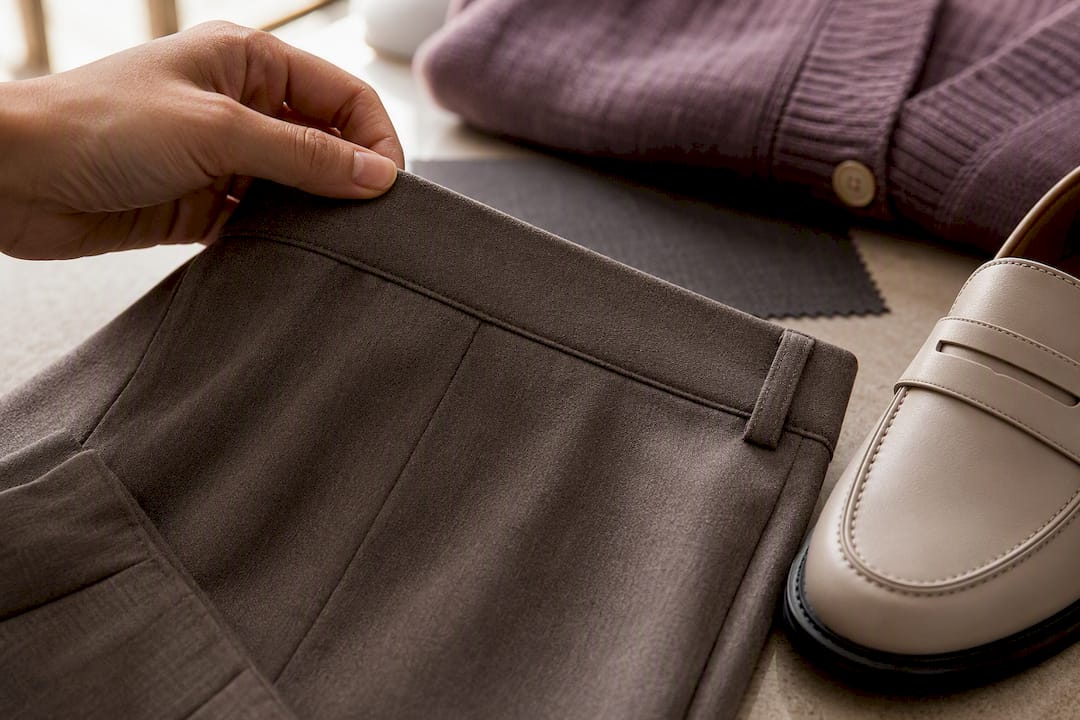
Layering solves more comfort problems than people realize. A cardigan you can add or remove handles the swing between an overcooled conference room and a warm walk to the parking lot, which beats committing to one fixed temperature all day. Keep a lightweight scarf at your desk for the same reason.
The real key is testing your outfit before the day that matters. Sit in your trousers for twenty minutes at home. Walk a few laps in new flats before you wear them on a day with back to back meetings. Comfort you’ve verified in advance beats comfort you’re hoping for on the fly.
Taking Business Casual From Day to Evening
The fastest way to shift a business casual outfit into evening territory is to swap exactly one piece, not the whole look. Trade flats for a heel, and the same trousers and blouse that worked all day suddenly read as dressed up for dinner or drinks after work.
Jewelry is your second lever. The minimal, single statement piece that kept your daytime look professional can get swapped for something bigger, a stack of bracelets, drop earrings, once the workday ends. Adding rather than replacing keeps the transition fast, which matters when you’re going straight from your desk to an evening event with no time to change.
A blazer works both ways depending on what’s underneath it. Worn over a blouse and trousers, it’s office-ready. Take it off and you’re left with a top and bottom that can carry a dinner reservation on their own, especially if the blouse has any interesting detail, a bow neck, a bit of sheen, a sleeve with texture. That’s the whole logic behind building a capsule around versatile pieces instead of outfit-specific ones: the same blazer that anchors your Tuesday meeting is also your evening layer for Tuesday night.
Dressing for Conservative vs. Creative Office Cultures
The single biggest mistake in business casual is applying one formula to every office. A conservative environment, law, finance, government, tends to reward the safest version of every choice: darker colors, more structure, less pattern, closed-toe shoes without exception.
A creative office, marketing, design, media, tends to have far more room to play. Bold color, one statement piece, even sneakers in some offices, can all read as intentional rather than sloppy. The jeans-plus-blazer formula that would raise eyebrows at a law firm might be the daily uniform at a design agency.
The move that works everywhere: when you’re new to an office, dress slightly more formal for the first two weeks and watch what everyone else actually wears, not what you assume the dress code means. If you’re ever unsure which direction to lean, especially for an interview, the safer bet is dressing one level more formal than you think you need to, then adjusting down once you’ve seen the room. It’s far easier to shed a blazer than to explain why you showed up underdressed.
Author Note: Shop Nova Online’s Practical Approach
Some brands build pieces around the formulas above with sizing meant to fit a variety of body types. A wide-leg-and-blouse set, for instance, mirrors that first outfit formula directly: one purchase, no separate shopping trip for a matching top. Inclusivity shapes every design decision here, not just the marketing copy.
— Joseph Kvarnstrom
Shop the Formulas: Curated Picks From Shop Nova Online
Building outfit formulas is one thing. Finding pieces that actually fit them without three separate shopping trips is another. Two-piece sets can solve the exact matching problem this guide has been walking through, with structured tops and bottoms designed to coordinate, sometimes available at various price points.
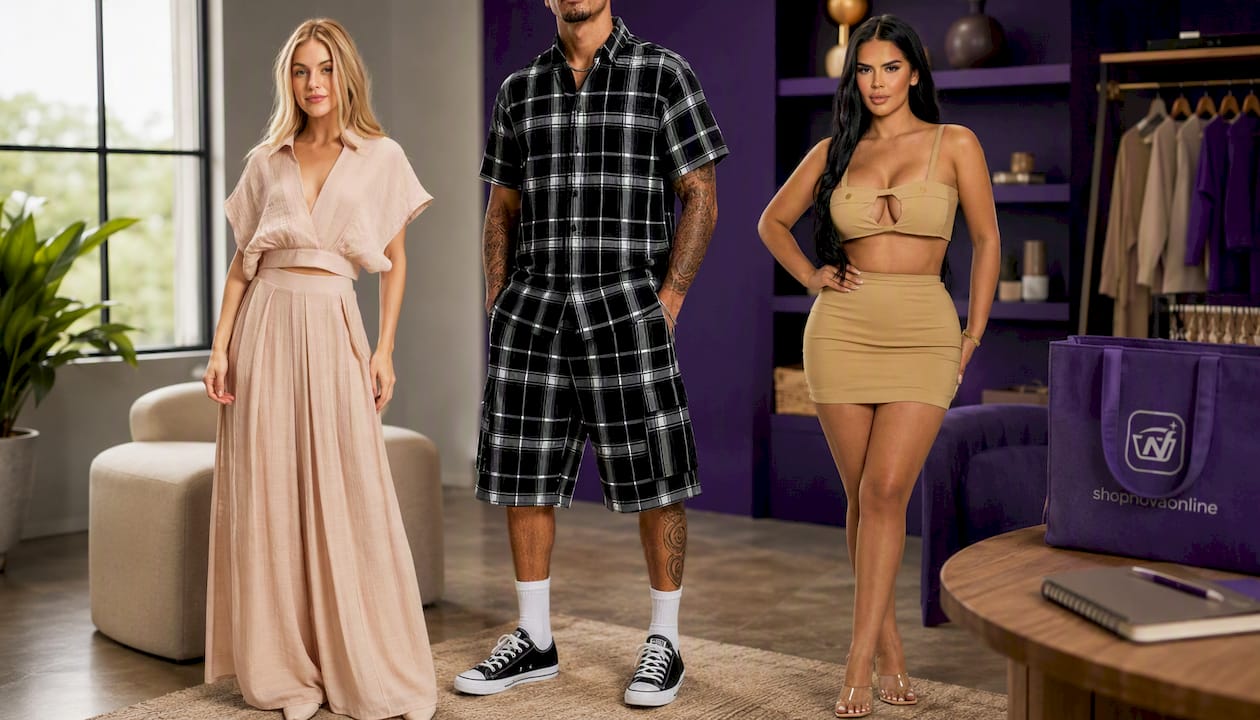
The Women’s Collared Wrap Top & Wide-Leg Pants Set maps almost exactly to the wide-leg-trousers-plus-blouse formula from earlier in this guide, one purchase gets you a coordinated top and bottom with zero guesswork on whether they match. Check the fabric note on the listing before you order; wide-leg cuts may fit best true to size or slightly fitted through the waist. For a skirt-based version of the same idea, the Women’s Skirt Sets fill the midi-skirt-plus-knit formula and work as a fast capsule addition when you need one more polished outfit without building it piece by piece. Shopnovaonline also carries men’s coordinated sets if you’re shopping for a partner’s casual wardrobe at the same time.
Start with one set that matches a formula you already wear often, that’s the fastest way to see whether it earns a permanent spot in your rotation.
Sources
- How to dress for a job interview (Indeed career advice)
- What to wear to an in-person job interview in 2025 (Forbes)
- Guide to Business Casual for Women (Corporette)


