
Use these six templates to cover nearly every warm-weather occasion: tee and tailored shorts, linen camp shirt and chinos, polo and chino shorts, summer suit separates, patterned shirt and shorts, and swim shorts with a linen shirt for beach-to-bar. Stick to linen or lightweight cotton, keep shorts around a 7-inch inseam, and you can dress up any of these by swapping sneakers for loafers or down by trading trousers for shorts.
TL;DR:
Breathing fabrics like linen and cotton-linen blends are essential for staying cool, while polyester and heavy denim should be avoided in hot weather.
Shorter shorts around a 7-inch inseam and properly fitted shirts that allow air circulation improve comfort and appearance across different body types.
A small, versatile shoe collection including sneakers, loafers, and sandals can handle most summer occasions without overpacking.
Layering lightweight pieces like unstructured linen blazers or overshirts provides comfort for cooler evenings without bulk.
A minimal capsule wardrobe of 12 to 18 carefully chosen pieces can produce over 50 outfit combinations, simplifying summer dressing without sacrificing variety.
Table of Contents
- 12 Men’s Summer Outfits You Can Copy Piece for Piece
- Build a Summer Capsule: How Many Pieces You Actually Need
- Fabrics and Fit: What Actually Keeps You Cool
- Shoes and Accessories That Finish the Look
- Office-Ready Summer Outfits That Beat the Heat
- Weddings, Date Nights, and Beach-to-Bar Days
- Where to Shop the Looks Above
- Sun Protection Considerations Beyond Sunscreen
- Layering for Cooler Summer Evenings
- Styling Summer Clothes for Your Actual Body Type
- Fit and Fabric Beat Fashion Every Time
- Shop the Pieces Behind These Summer Formulas
- Sources
- FAQ
12 Men’s Summer Outfits You Can Copy Piece for Piece
Most guys don’t need more clothes. They need a short list of combinations that work without thinking too hard on a Tuesday morning in July. These twelve looks cover the range from grocery-run casual to wedding-guest sharp, and each one follows the same logic: breathable fabric, relaxed but not sloppy fit, and a shoe that matches the occasion.
1. Tee and Tailored Shorts
A solid crewneck tee in cotton jersey, paired with flat-front shorts that hit right above the knee, is the baseline for warm weather. Keep the shorts around a 7-inch inseam so the proportions stay clean rather than boyish. Fit note: the tee should skim the chest, not hug it. Styling tips: roll nothing, tuck the front only if the shorts have a defined waistband, and pick one color that contrasts with the shorts. Wear it with white leather sneakers. A henley collar casual tee works especially well here since the placket adds texture without looking dressy.
2. Linen Camp Shirt and Chinos
The camp collar shirt in linen or a linen blend, worn open over a plain undershirt or on its own if the weather allows, pairs with straight-leg chinos in a lighter shade. Fit note: let the shirt hang loose at the hem, untucked. Styling tips: choose a chino in stone, olive, or light blue, roll the shirt sleeves once, and skip the belt if the chinos have a clean waistband. Suede loafers or espadrilles finish it. This is the outfit that reads “put together” without trying, and it’s the template Ape to Gentleman leans on repeatedly for warm-weather versatility.
3. Polo and Tailored Shorts
A fine-pique polo with tailored (not cargo-style) shorts is the safest option for lunch, errands, or a casual office. Fit note: the polo should have a slight taper at the waist, and the collar should lie flat, not curl. Styling tips: one button undone, no undershirt, and a shoe that matches the shorts’ formality. Pair it with suede loafers for something dressier or canvas slip-ons for pure casual. A lightweight breathable polo covers this without the sweat patches cheap synthetic polos are famous for.
4. Summer Suit Separates
Buying a suit jacket and trousers as separates, rather than a matched set, gives you two pieces that mix into more outfits. A tropical wool or linen blazer over linen trousers in a contrasting tone works for anything from a client dinner to a summer wedding. Fit note: unstructured shoulders and no lining make the difference between wearable and unbearable at 85 degrees. Styling tips: skip the tie, leave one jacket button, and choose a trouser in a shade lighter than the jacket. Pair with a leather loafer, never a sneaker.
5. Patterned Shirt and Shorts
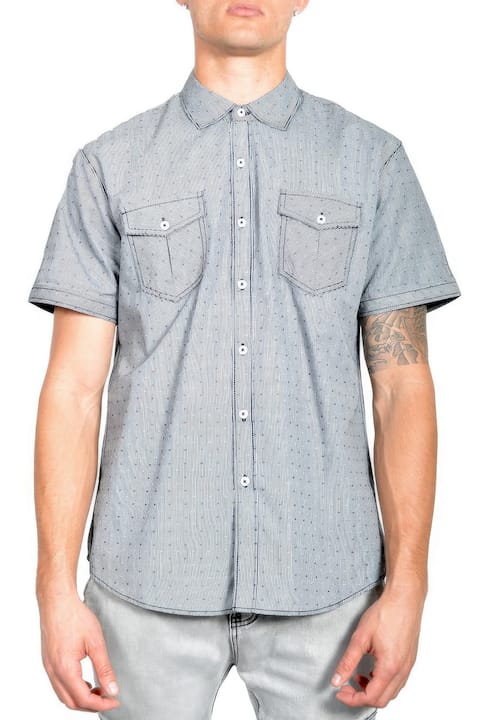
A short-sleeve shirt with a subtle print, tucked loosely into flat-front shorts, is the look for a rooftop happy hour or a barbecue. Fit note: pick one pattern with muted colors rather than anything loud across the whole shirt. Styling tips: tuck the front half only, keep accessories minimal, and match the shoe to the shirt’s undertone. White sneakers or espadrilles both work. The patterned short sleeve button-down is built for exactly this kind of low-effort, high-payoff outfit.
6. Swim Shorts and Linen Shirt (Beach to Bar)
Tailored swim shorts, ones that look like regular shorts rather than baggy trunks, paired with an open linen shirt, carry you from the sand to dinner without a wardrobe change. Fit note: the swim shorts should have a proper waistband and land above the knee. Styling tips: leave the shirt fully unbuttoned over a bare chest at the beach, then button it two-thirds up for dinner. Leather sandals handle both settings.
More Looks Worth Knowing
Beyond the six core formulas, a few situational looks round out a warm-weather rotation: a chambray shirt layered over a tee for breezy evenings, tucked tees with tailored trousers for a smarter casual look, seersucker or madras shorts for a preppier crowd, straight-leg linen trousers with a simple tee for travel days, and a short-sleeve knit polo with white denim for a texture-forward alternative to cotton chinos. Each borrows fabric and fit rules from the core six. As GQ points out, the best summer clothes tend to be the ones that work day into night without a second thought.
Build a Summer Capsule: How Many Pieces You Actually Need
A workable summer-inclusive capsule wardrobe typically runs 25 to 37 pieces, covering tops, bottoms, outerwear, and shoes across the season. That range works if you want variety. If you’d rather stop deciding what to wear altogether, a tighter 12 to 18 piece summer-only capsule gets you there faster, since it removes anything that doesn’t mix with at least three other pieces.
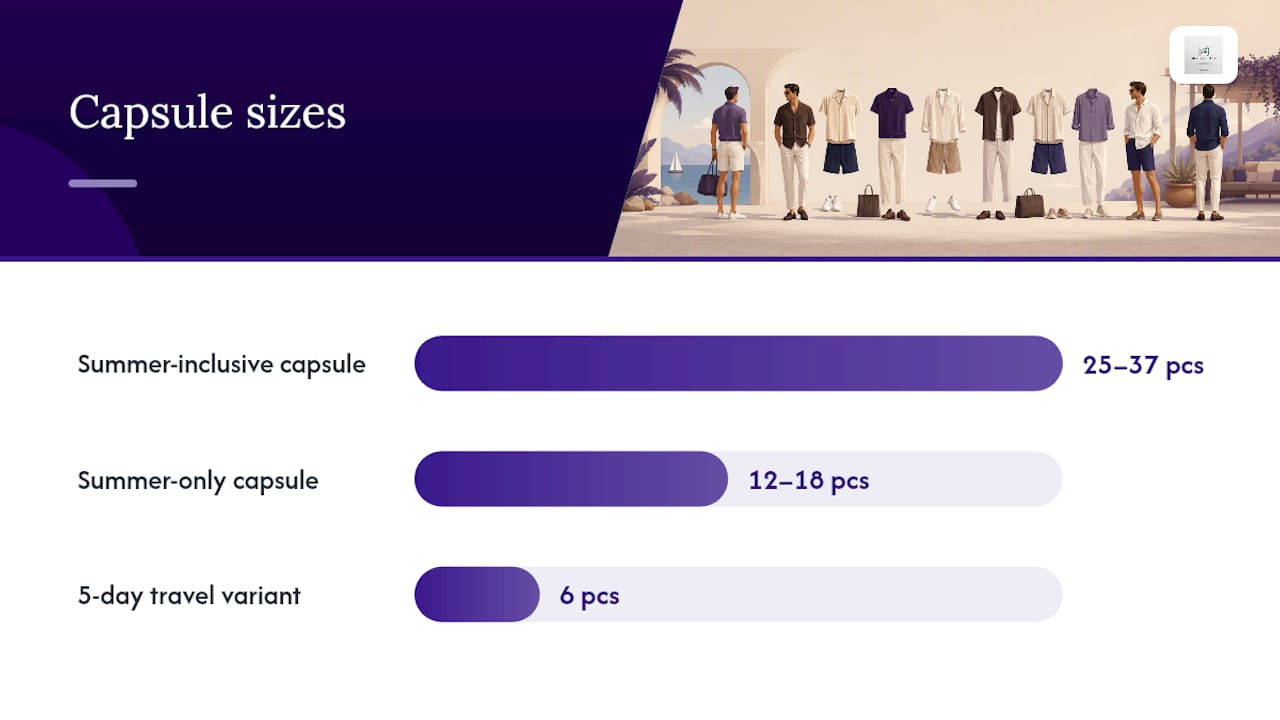
Quick math: eighteen pieces, mixed and matched, produce well over 50 distinct outfit combinations when you count shirts, bottoms, and shoes separately. That’s more variety than most closets with triple the item count actually deliver.
Here’s a sample 18-item summer capsule broken down by category:
-
Tops (6): two plain tees, one henley, two short-sleeve button-downs, one linen camp shirt
-
Bottoms (5): two pairs of tailored shorts, two pairs of chinos, one pair of linen trousers
-
Layers (2): one lightweight overshirt, one unstructured linen blazer
-
Shoes (3): white leather sneakers, suede loafers, leather sandals
-
Swim (1): one pair of tailored swim shorts
-
Accessories (1): one webbing or leather belt that works with both chinos and shorts
If you travel often, build a five-day travel variant from the same capsule: three tops, two bottoms, one pair of shoes, and the swim shorts if there’s a pool involved. Wash every two to three wears for tees and polos, and every wear for anything linen, since linen actually looks better a little rumpled.
Fabrics and Fit: What Actually Keeps You Cool
Fiber matters more than color when it comes to staying comfortable in the heat. Linen wins for pure breathability and it dries noticeably faster than cotton in humid climates, which is why it shows up in nearly every warm-weather capsule. Cotton-linen blends split the difference, holding a crisper look than pure linen while still breathing well. Lightweight cotton in a poplin or voile weave is your best bet for dress shirts that need to look sharp without cooking you. Chambray sits a notch heavier but still works for casual layering. Tropical wool, a loose, open weave distinct from regular suiting wool, is the only wool worth wearing above 80 degrees.
Skip polyester blends and heavy denim. Both trap heat and hold onto sweat instead of releasing it, which is the opposite of what you want in July.
Fabric |
Breathability |
Dry time |
Best use |
|---|---|---|---|
Linen |
Excellent |
Fast |
Shirts, trousers, blazers |
Cotton-linen blend |
Very good |
Moderate |
Shirts, chinos |
Lightweight cotton (poplin/voile) |
Good |
Moderate |
Dress shirts, office wear |
Chambray |
Moderate |
Moderate |
Casual layering |
Tropical wool |
Good |
Slow |
Suit separates |
Polyester blend |
Poor |
Slow (traps heat) |
Avoid |
Heavy denim |
Poor |
Slow |
Avoid in extreme heat |
On fit: go slim, not tight. Shorts should sit around that 7-inch inseam mark, trousers should break just above the shoe rather than pooling at the ankle, and shirts need enough room in the chest and back to let air move.
Pro Tip: Ask a tailor for a voile back panel on formal shirts, a strip of lighter, more breathable fabric sewn into the back where it doesn’t show. It’s a small tweak that makes a dress shirt wearable in real heat without changing how it looks from the front.
Shoes and Accessories That Finish the Look
A handful of shoe types cover nearly every summer situation, and you don’t need more than four or five pairs total. White leather sneakers handle daytime casual and travel. Suede loafers step things up for dinner or the office without a full lace-up shoe. Espadrilles and canvas slip-ons are built for the beach, the boat, or a backyard party. Leather sandals cover the beach-to-bar transition, and one lightweight leather dress shoe covers weddings or anything formal. That’s the full shoe rotation most capsule guides recommend, and it rarely needs expanding.
Accessories round things out:
-
A pair of polarized sunglasses cuts glare and protects your eyes on bright days.
-
A rubber or NATO-strap watch survives sweat and pool water better than leather.
-
A straw or canvas hat with a real brim does more for sun protection than any product you’ll put on your skin.
-
No-show socks or going sockless with loafers keeps feet cooler in leather shoes.
-
Rinse and air-dry linen and cotton pieces rather than machine-drying them; heat breaks down natural fibers faster than wear does.
Pro Tip: Rotate your belt with your shoes, not your pants. A tan belt with tan loafers reads intentional; a black belt with tan shoes reads like you didn’t check the mirror.
Office-Ready Summer Outfits That Beat the Heat
Dressing professionally in a heatwave comes down to fabric choices more than garment count. Here’s the quick rulebook for calibrating summer business casual:
-
Swap the blazer for an unstructured linen or linen-blend version if your office still expects a jacket. Unlined construction cuts the heat load dramatically.
-
Choose a fine-pique polo or a voile dress shirt over standard cotton-poly blends, since both breathe better under air conditioning that may or may not be working.
-
Wear linen-blend trousers instead of wool suit pants, keeping the same tailored silhouette without the insulation.
-
Drop the tie once the forecast clears 85 degrees, unless client-facing meetings require it that day specifically.
-
Choose loafers over lace-ups for the extra half-degree of comfort that adds up over a full workday.
-
Save shorts for genuinely casual offices only. Even the most relaxed dress codes rarely extend to bare knees in client meetings.
Ask yourself three questions before getting dressed: does anyone senior wear shorts here, is this a client-facing day, and would this outfit survive a walk outside at lunch? If the answer to all three points toward comfort, lean into linen and loafers. If not, keep the tailored trousers and drop only the tie.
Weddings, Date Nights, and Beach-to-Bar Days
Wedding guest: A linen or tropical wool suit, worn as separates, handles nearly every outdoor summer wedding. Stick to sage, tan, light blue, or soft gray, colors that photograph well and don’t compete with the wedding party. Skip black entirely for daytime ceremonies. Pair with a leather loafer or oxford, never sneakers, unless the invitation explicitly says casual.
Date night: Take the linen camp shirt or polo template and swap the shorts for tailored trousers. That one change moves the outfit from “weekend errands” to “reservation at 8.” Suede loafers close the gap.
Beach to bar: The swim shorts and linen shirt combination exists precisely for this transition. Pack a spare linen shirt in a rolled pouch, since it wrinkles less than cotton and looks intentionally relaxed even straight out of a bag. Leather sandals work for both settings, which means one shoe covers the entire day. This is also where a lightweight suit separates option earns its keep if dinner turns out to be dressier than expected.
Where to Shop the Looks Above
A well-curated online fashion retailer’s summer lineup maps directly onto the templates above, so you’re not hunting across five different retailers to build one outfit. Breathable, inclusive-sized fabrics run through the catalog rather than sitting in one token “summer” section.
-
Linen and linen-blend trousers cover the summer suit separates and elevated casual templates.
-
Patterned short-sleeve shirts fit the beach-to-bar and shorts-and-shirt formulas.
-
Breathable polos in multiple weights handle the polo-and-shorts template and office heatwave swaps.
-
Inclusive sizing runs across the summer collection, so fit isn’t limited to one body type.
Sun Protection Considerations Beyond Sunscreen
Clothing does more sun protection work than most guys give it credit for. A tightly woven fabric like poplin or a denser linen blend blocks more UV than a loose, open knit tee, even at the same color and weight. Darker colors absorb more UV and heat but also block more of it from reaching skin, which is why a navy linen shirt can actually protect better than a white one, even though white feels cooler to the touch.
Sleeve length matters more than most sunscreen routines. A short-sleeve button-down covers the shoulders and upper arms, the spot most guys forget to reapply sunscreen on during a long day outside. If you’re going sleeveless or in a tank for the beach, that’s the moment sunscreen actually needs to do the heavy lifting, since the fabric isn’t helping at all.
Hats are underrated as a sun protection tool and overrated as a fashion risk. A brimmed straw or canvas hat protects the face, ears, and neck, which is where a lot of long-term sun damage actually shows up. Sunglasses with real UV protection, not just tinted lenses, protect the eyes and the thin skin around them.
The practical rule: on beach or pool days, prioritize a woven shirt over sunscreen alone, and treat the hat as part of the outfit rather than an accessory you forget in the car.
Layering for Cooler Summer Evenings
Summer evenings drop temperature faster than the daytime heat suggests, especially near water or at altitude. A lightweight overshirt, essentially a shirt-jacket hybrid in a breathable cotton or linen blend, is the single most useful layering piece for this. It adds warmth without the bulk of a real jacket and folds down small enough to carry in a bag all day.
A fine-knit crewneck sweater in cotton or a cotton-linen blend works as a second option, worn open over a tee once the sun goes down. Skip anything in wool or heavy fleece. Those fabrics trap the day’s heat and feel wrong the moment you put them on over sun-warmed skin.
For beach towns or coastal evenings specifically, a denim shirt worn unbuttoned over a tee splits the difference between structure and breathability. It’s heavier than linen but still breathes better than most knitwear, and it looks intentional rather than like you grabbed the first warm thing in your bag.
The habit worth building: carry one layering piece folded in a bag or car on any day you’re outside past sunset. The five extra ounces in your tote beat shivering through dinner because the temperature dropped 15 degrees the moment the sun went down.
Styling Summer Clothes for Your Actual Body Type
Fit rules shift depending on build, and the generic “just wear a slim fit” advice fails a lot of guys. For broader or heavier builds, structured fabrics like a mid-weight linen blend hold their shape better than gauzy, ultralight linen, which can cling in the wrong places. A slightly longer hem on shirts, worn untucked, breaks up the silhouette better than a cropped fit.
For leaner or slighter builds, lighter fabrics and closer fits actually work better, since heavier or boxier cuts can swallow a smaller frame. A tucked-in shirt with a defined waistband on shorts or trousers gives shape where a loose fit would just look shapeless.
Taller guys benefit from vertical patterns and trousers with a slightly higher rise, which keeps proportions balanced rather than making legs look even longer relative to the torso. Shorter guys generally do better avoiding oversized prints and sticking to a shorter shirt hem so the torso doesn’t visually shrink.
Across every body type, the same rule holds: fit at the shoulders and chest matters more than fit at the waist. A shirt that fits the shoulders can always be tailored slimmer through the body for a few dollars. A shirt that fits the waist but pulls at the shoulders can’t be fixed at all.
Fit and Fabric Beat Fashion Every Time
The single rule I’d hand any guy rebuilding his summer wardrobe: chase fit and fabric before you chase trends. A perfectly fitted linen shirt in a boring color will outperform a trendy print that bunches at the shoulders, every single time. The habit that actually sticks is simpler than most style advice admits: pick three of the six templates above and rotate them without overthinking the choice each morning.
The guys who dress well in summer aren’t the ones with the biggest closets. They’re the ones who stopped buying clothes that need explaining.
— Joseph Kvarnstrom
Shop the Pieces Behind These Summer Formulas
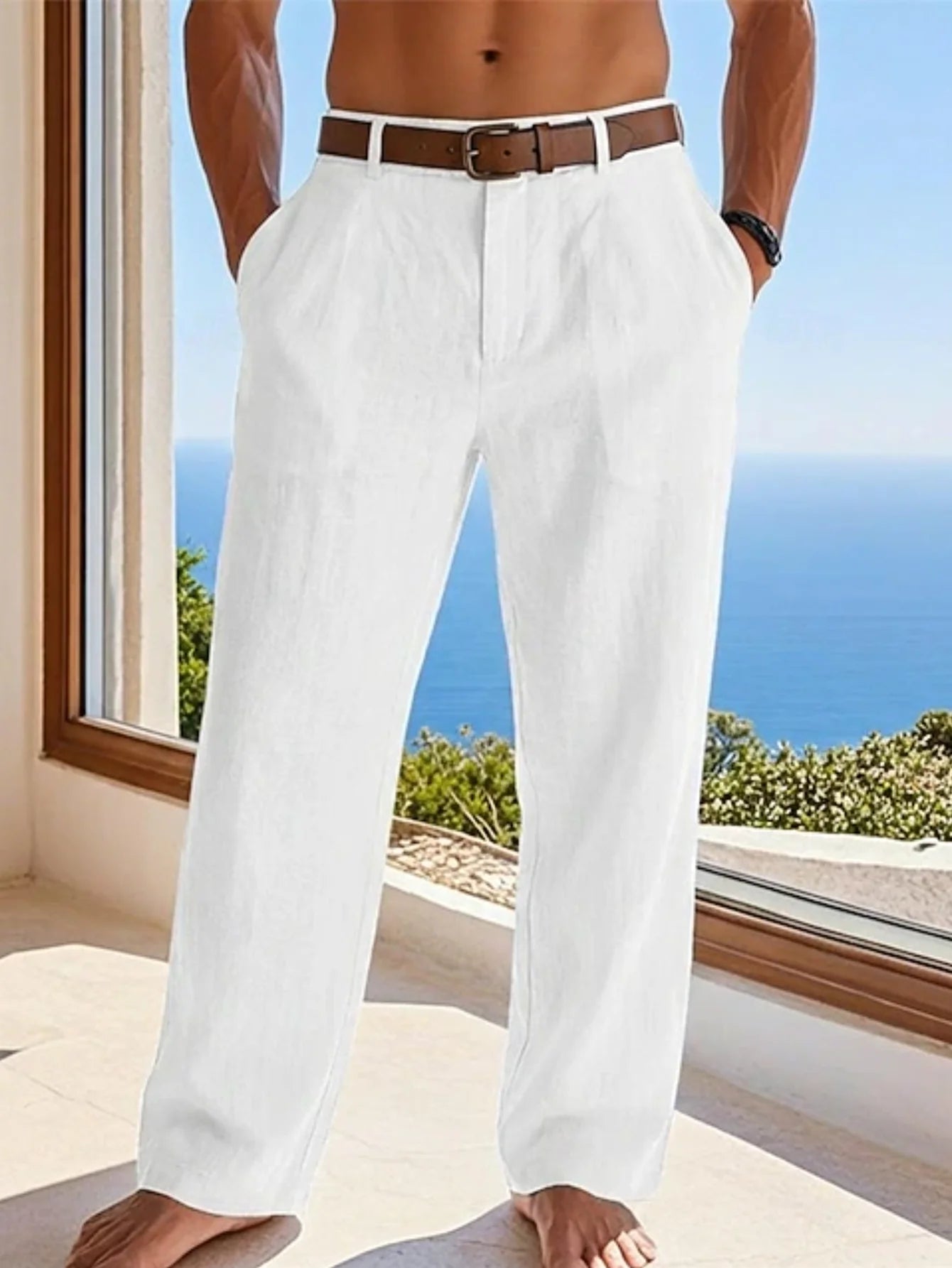
A certain online retailer carries garment types that align with this guide, priced so building a real summer capsule doesn’t mean rationing which outfit you can afford to wear twice a week. If the suit-separates template appealed to you, the formal linen summer pants give you the trouser half of that look in a straight-tube cut that pairs with an unstructured blazer or stands alone with a polo.
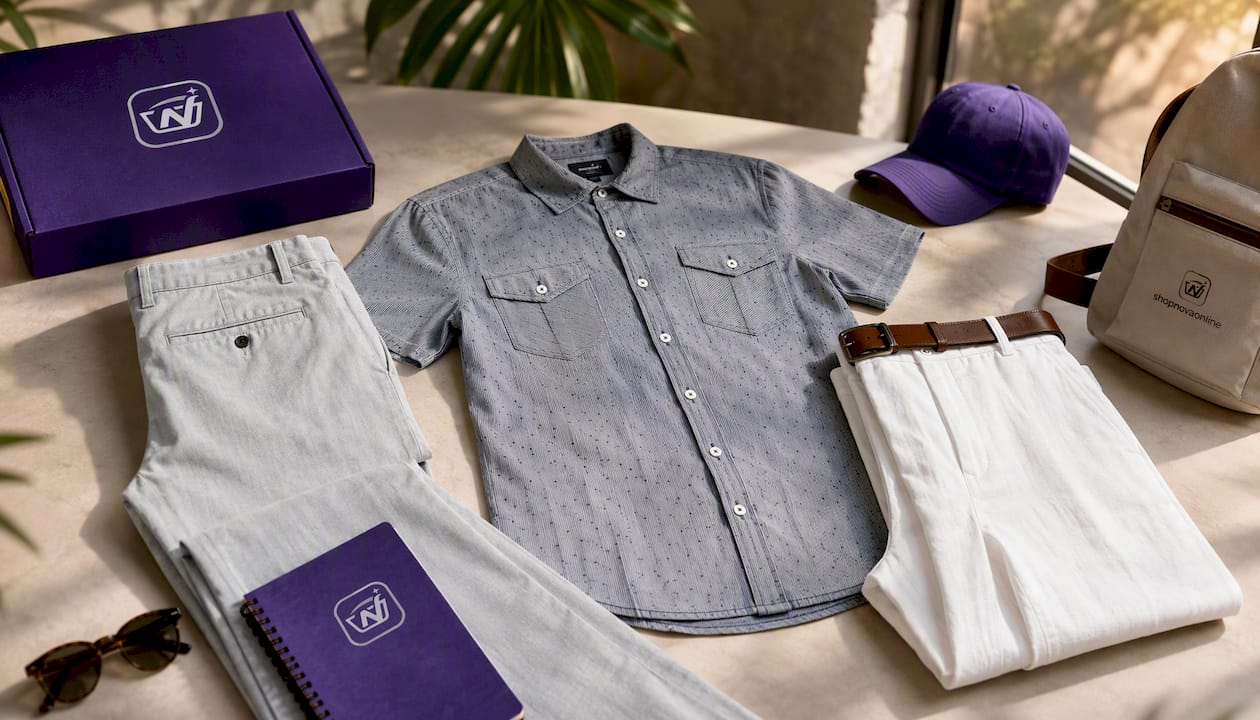
For the beach-to-bar and patterned-shirt formulas, the patterned short sleeve button-down covers both settings without a wardrobe change between them. And for the everyday tee-and-shorts or travel-day rotation, the solid color casual pants work as a chino stand-in that handles heat better than standard cotton twill.
Browse the current summer lineup, pick two or three pieces that match the templates you’ll actually wear, and check sizing against the inclusive size charts on each product page before you check out.
Sources
- The Guardian — The ultimate men’s capsule wardrobe
- Ape to Gentleman — Men’s summer outfits (Top 10 list)
- GQ — The best summer clothes for men in 2026
- Reviewed — Build a men’s capsule wardrobe (fabric and practical tips)


